Revolutionizing Treatments for Blood Cancers and Solid Tumors
TAIPEI, June 16, 2026 /PRNewswire/ -- On June 16, the Tang Prize in Biopharmaceutical Science announced its 2026 laureates. Three leading scientists in the field of cellular immunotherapy, Drs. Steven A. Rosenberg, Michel Sadelain, and Carl H. June, have been named joint laureates "for the discovery and development of tumor-infiltrating lymphocyte (TIL) and chimeric antigen receptor T-cell (CAR-T) therapies, which have revolutionized treatment for blood cancers and solid tumors."
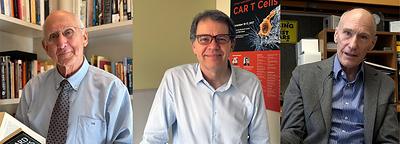
Cellular immunotherapy uses a patient's own immune cells, including genetically engineered CAR-T, to recognize and destroy cancer cells, and it has emerged as one of the most transformative advances in cancer treatment in recent years. The contributions of the three laureates have laid the foundation for a new era of "living drugs."
Since the first FDA approval in 2017, CAR-T therapy has already benefited over 30,000 patients with blood cancers worldwide, providing life-saving options for patients with recurrent and/or refractory blood cancers. Furthermore, TIL therapy has established a new option for treating advanced solid tumors, especially metastatic melanoma. Recent advances in CAR-T therapy in 2026 have also expanded into areas such as CRISPR-Cas9-based cell engineering, the treatment of autoimmune diseases such as systemic lupus erythematosus, cardiac injury repair, and research targeting senescence.
Widely known as the "Father of Cancer Immunotherapy," Dr. Steven A. Rosenberg has served as Chief of the Surgery Branch at the National Cancer Institute (NCI) since 1974. He has built the foundational clinical framework for adoptive cell therapy (ACT) and showed that high-dose interleukin-2 (IL-2) could stimulate T cell proliferation and enhance their ability to kill cancer cells, leading to regression of metastatic tumors. He also demonstrated that TILs could induce regression of metastatic melanoma. In the 1990s, he achieved another milestone by receiving the first regulatory approval to introduce foreign genes into humans.
Dr. Michel Sadelain and Dr. Carl H. June are two leading pioneers in the development of CAR-T cell therapy. Dr. Sadelain discovered that adding the CD28 co-stimulatory domain to the CD3ζ chain yielded T cells with therapeutic potential, establishing the core architecture that has become the standard framework for all subsequently FDA-approved CAR-T therapies. He also identified CD19 as an effective therapeutic target for B-cell malignancies and provided the first demonstration that human CD19 CAR-T cells could treat cancer in mice. Dr. June helped demonstrate CD28 co-stimulation as essential for T-cell activation and applied the anti-CD3 and anti-CD28 bead expansion protocol, which has become the global manufacturing standard for CAR-T cells. His partnership with Novartis culminated in Kymriah becoming the first FDA-approved CAR-T therapy in 2017, marking a major step in bringing CAR-T therapy from research into clinical medicine.
About the Tang Prize
Since the advent of globalization, humanity has enjoyed unprecedented benefits from advances in civilization and science. Yet a multitude of challenges, such as climate change, the emergence of new infectious diseases, the widening wealth gap, and moral degradation, have surfaced along the way. Against this backdrop, Dr. Samuel Yin established the Tang Prize in December 2012. It consists of four award categories: Sustainable Development, Biopharmaceutical Science, Sinology, and Rule of Law. Every two years, four independent and professional selection committees, comprising many internationally renowned experts, scholars, and Nobel laureates, choose Tang Prize laureates who have made substantive contributions and generated a far-reaching impact on the world, regardless of race, nationality, gender, or religion. A cash prize of NT$50 million (approximately US$1.6 million) is allocated to each category, with NT$10 million (approximately US$320,000) of it being a grant intended for research or educational outreach programs to encourage professionals in every field to examine mankind's most urgent needs in the 21st century, and become leading forces in the sustainable development of human society through their outstanding research outcomes and active civic engagement.
 View original content to download multimedia:https://www.prnewswire.co.uk/news-releases/2026-tang-prize-in-biopharmaceutical-science-awarded-to-three-pioneers-of-cellular-immunotherapy-302801657.html

Das Österreichische Rote Kreuz warnt vor Beginn der Urlaubssaison vor niedrigen Blutreserven und ruft die Bevölkerung dringend zum Spenden auf. Blut könne nicht künstlich hergestellt werden, eine Konserve sei nur 42 Tage haltbar und werde in Österreich im Schnitt alle 90 Sekunden benötigt, heißt es aus der Organisation. Ziel ist es, die Versorgung der Spitäler mit dem lebenswichtigen Notfallmedikament auch in den Sommermonaten abzusichern.
Bundesrettungskommandant Gerry Foitik verweist darauf, dass der Bedarf an Blutkonserven keinen Urlaub kenne. Blut werde nicht nur für Operationen benötigt, sondern ebenso für Geburten, Krebstherapien und die Behandlung verschiedener Erkrankungen. Gerade vor dem Sommer sei es daher wichtig, einen Termin zur Blutspende zu vereinbaren, betont Foitik. Spendenzeiten und -orte sind auf der Plattform blut.at gelistet, über die auch Terminreservierungen möglich sind.
Am Sonntag, dem 14. Juni, fallen Vatertag und Weltblutspendetag zusammen – ein Datum, das das Rote Kreuz für eine groß angelegte Aktion in Wien nutzt. In der „Arena 21“ im Museumsquartier (Museumsplatz 1, 1070 Wien) können Interessierte zwischen 10 und 12 Uhr sowie von 13 bis 16 Uhr Blut spenden. „Mit einer Blutspende retten Sie Leben“, sagt Simon Gänsdorfer, Leiter der Blutspende für Wien, Niederösterreich und das Burgenland. Die Aktion ist auch als Familienevent angelegt und soll insbesondere jüngere Menschen für das Thema sensibilisieren.
Begleitet wird die Veranstaltung im Museumsquartier von DJ-Musik, Vitamin-Mocktails, Gewinnspielen und einer Kids Area. Das Rote Kreuz setzt damit bewusst auf ein niederschwelliges Angebot, um Hemmschwellen beim Blutspenden zu senken und zusätzliche Zielgruppen anzusprechen. Neben der Sonderaktion am Weltblutspendetag bleibt die Blutspendezentrale in Wien (Wiedner Hauptstraße 32, 1040 Wien) ganzjährig geöffnet; auch in allen anderen Bundesländern bestehen laufend Möglichkeiten zur Blutspende.