Funding for Anderon to help scale and expand access to quantum wafer technology
ALBANY, N.Y., Sept. 16, 2026 /PRNewswire/ -- Today, Anderon LLC ("Anderon"), an IBM (NYSE: IBM) company, announced the finalization of a $1 billion award under the CHIPS and Science Act with the U.S. Department of Commerce (the "Department"). The award will accelerate Anderon's R&D efforts to advance the nation's quantum wafer manufacturing capabilities.
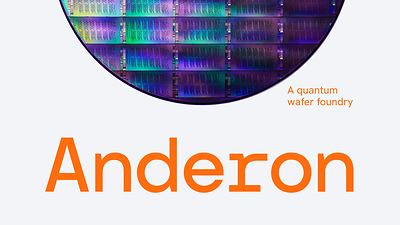
Announced in May under a letter of intent between the Department and IBM, Anderon operates a state-of-the-art 300-millimeter pure-play quantum wafer foundry, backed by an additional $1 billion investment from IBM. Headquartered in Albany, New York, the new venture serves the quantum industry as a pure-play foundry, offering quantum wafer manufacturing to customers across the ecosystem.
"This agreement with the Department of Commerce strengthens our ability to deliver the manufacturing scale the quantum industry needs," said Mukesh Khare, CEO, Anderon. "We're building a foundation that will let quantum move from research breakthroughs to real-world impact."
"IBM's quantum roadmap requires a manufacturing foundation that can scale at the pace our work demands," said Jay Gambetta, Director, IBM Research & IBM Fellow. "Anderon's focus on wafer fabrication gives us exactly that and strengthens our ability to execute and accelerate progress toward the next era of quantum computing."
Anderon offers specialized wafers supporting high-performance superconducting qubit arrays, quantum input/output signaling, and readout signal chain components, foundational capabilities that support a range of quantum architectures. It plans to expand to other quantum modalities in the future.
The company has already achieved a significant operational milestone, with the first quantum wafers now running through its manufacturing facility. This early production activity demonstrates the company's ability to quickly translate advanced pre-production research into commercial-grade quantum wafer technologies.
Quantum computing has the potential to drive breakthroughs across industries, from advanced materials and chemistry to optimization and cybersecurity. As the technology matures toward large-scale commercial applications, scalable manufacturing will be critical to realizing its full potential. Anderon will provide an advanced manufacturing foundation which is needed to produce quantum wafers at production scale to accelerate innovation, strengthen domestic supply chains, and support the continued growth of a robust quantum ecosystem.
To learn more, visit anderon.com.
About Anderon
Anderon is the world's most advanced pure-play quantum foundry, built to accelerate the future of the quantum industry. Customers gain access to a production-scale 300mm fab purpose-built for quantum processors. Anderon's best-in-class wafer fabrication is enabled by proven quantum IP, a highly skilled workforce, and billions in prior site investment. Visit anderon.com for more information.
About IBM
IBM is a leading provider of global hybrid cloud and AI, and consulting expertise. We help clients in more than 175 countries capitalize on insights from their data, streamline business processes, reduce costs and gain the competitive edge in their industries. Thousands of governments and corporate entities in critical infrastructure areas such as financial services, telecommunications and healthcare rely on IBM's hybrid cloud platform and Red Hat OpenShift to affect their digital transformations quickly, efficiently and securely. IBM's breakthrough innovations in AI, quantum computing, industry-specific cloud solutions and consulting deliver open and flexible options to our clients. All of this is backed by IBM's long-standing commitment to trust, transparency, responsibility, inclusivity and service.
Visit www.ibm.com for more information.
Media contacts:
Brittany Forgione
IBM
Brittany.Forgione@ibm.com
Willa Hahn
IBM
Willa.Hahn@ibm.com
 View original content to download multimedia:https://www.prnewswire.co.uk/news-releases/anderon-an-ibm-company-finalizes-agreement-with-the-us-department-of-commerce-for-a-1-billion-chips-award-to-accelerate-rd-for-us-based-pure-play-quantum-foundry-302879788.html

Der bewaffnete Juwelenraub im Wiener Museum für angewandte Kunst (MAK) vom 27. August ist nach Einschätzung externer Fachleute nicht auf Versäumnisse der Institution zurückzuführen. Ein 34 Seiten umfassendes Gutachten des Sicherheitsconsulting-Unternehmens LifeLine's kommt zu dem Schluss, dass das Haus sowohl bei den technischen Sicherheitsvorkehrungen als auch beim operativen Vorgehen während des Überfalls und im anschließenden Krisenmanagement korrekt gehandelt hat. Die zentrale Frage, ob das Ereignis sicherheitstechnisch und organisatorisch adäquat bewältigt wurde, beantworten die Gutachter mit einem „klaren Ja“.
Im Fokus der Untersuchung stand die Ausstellung „Glanzstücke. Van Cleef & Arpels High Jewelry x Masterpieces from the MAK Collection“, in deren Juwelenraum zwei bewaffnete Täter mitten am Nachmittag eine Vitrine einschlugen und mit einem historischen Diamantcollier flüchteten. Laut Bericht waren alle mit den Vertragspartnern vereinbarten Sicherheitsstandards und Normen erfüllt. Dazu zählten unter anderem der Einsatz von 185 Videokameras, einer dreistelligen Zahl von Alarmsensoren, speziellem Sicherheitsglas sowie geschultem Sicherheitspersonal. Der nach der Tat eingeführte Einsatz von Metalldetektoren war laut Gutachten zuvor weder verlangt noch durch bestehende Standards vorgesehen.
Besonders hervor hebt der Bericht die bewusste Entscheidung für den Vorrang des Personenschutzes vor dem Objektschutz. Aus diesem Grund verzichtete das Museum auf laute Alarmsignale während der Öffnungszeiten und auf bewaffnete Sicherheitskräfte im Ausstellungsbereich. Die direkte Alarmierung von Polizei und hauseigener Sicherheitszentrale wurde den Angaben zufolge um 14:01:22 Uhr ausgelöst und habe „optimal und effizient“ funktioniert. Auch das Verhalten der anwesenden Securitas-Mitarbeitenden wird positiv bewertet: Sie hätten eine unmittelbare Konfrontation mit den bewaffneten Tätern und damit das Risiko einer Eskalation, etwa durch Panik oder mögliche Geiselnahmen, vermieden.
Die Gutachter kommen insgesamt zu dem Befund, dass ein von professionellen Tätern geplanter und durchgeführter Raub unter regulären Öffnungsbedingungen mit „vernünftigen Mitteln“ nicht vollständig zu verhindern gewesen sei – selbst bei Einsatz moderner Überwachungstechnik und etablierter Sicherheitsprotokolle. Aus ihrer Sicht bestätigt der Fall eine bekannte Grenze musealer Schutzkonzepte: Absolute Sicherheit wäre nur um den Preis massiver Einschränkungen der Bewegungsfreiheit von Besucherinnen und Besuchern zu erreichen, formuliert das Gutachten sinngemäß. Das MAK wird damit für den konkreten Vorfall entlastet, auch wenn der spektakuläre Coup die Debatte über Sicherheitsstandards in Ausstellungshäusern neu anheizen dürfte.