SEOUL, South Korea, Aug. 12, 2026 /PRNewswire/ -- Hyundai Motor Group (the Group) today shared its digital transformation (DX) and AI transformation (AX) journey, key achievements and future plans at the Hyundai Motor Group AX Achievement Showcase ('Beyond AI, Transforming the Way We Work') — held at its headquarters in Seoul.
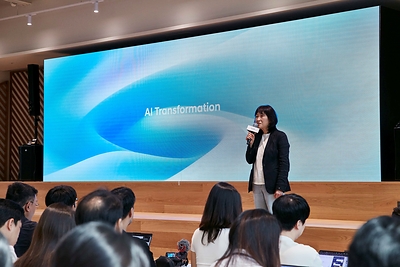
The event highlighted how the Group has prepared the foundation for AI transformation through its digital transformation efforts since 2019 and showcased the progress, key achievements and future direction of its enterprise-wide AI transformation initiatives.
As the mobility industry rapidly evolves from a manufacturing-centered industry to one where data and software capabilities define competitiveness, the Group has proactively advanced its digital transformation efforts since 2019. Building on accumulated data and a digitally enabled working environment, the Group is now accelerating AI transformation across the organization.
"AI is undoubtedly an important technology, but ultimately it is a tool that companies must utilize. What matters is not the technology itself, but how quickly an organization can understand new technologies, including AI, apply them to its work and business, and internalize them as a source of competitive advantage. Building on our ongoing digital transformation efforts, Hyundai Motor Group is expanding AI transformation through the integration of AI and other intelligent technologies." – Eunsook Jin, President and Head of ICT Management Division, Hyundai Motor Group
More information about Hyundai Motor Group can be found at: http://www.hyundaimotorgroup.com or Newsroom: Media Hub by Hyundai, Kia Global Newsroom, Genesis Newsroom


 View original content to download multimedia:https://www.prnewswire.co.uk/news-releases/hyundai-motor-group-accelerates-ai-transformation-across-its-business-advancing-toward-the-physical-ai-era-302849276.html

Die Artenvielfalt von Taufliegen (Drosophila) im Raum Wien ist in den vergangenen drei Jahrzehnten massiv eingebrochen. Forschende des Naturhistorischen Museums (NHM) Wien berichten, dass die Zahl der in der Stadt nachgewiesenen Arten im Vergleich zu einer Erhebung aus dem Jahr 1994 um rund 50 Prozent gesunken ist. Die Ergebnisse, die nun im Fachjournal „Ecology and Evolution“ veröffentlicht wurden, deuten darauf hin, dass vormals häufige Arten durch zugewanderte Taufliegen verdrängt worden sein könnten.
Grundlage der aktuellen Analyse ist das Citizen-Science-Projekt „Vienna City Fly“, das 2024 einfache Fliegenfallen an freiwillige Laienforscher in Wien, Niederösterreich und dem Burgenland verteilte. Die zurückgesandten Proben wurden für die nun publizierte Studie gezielt auf Fänge in unmittelbarer Nähe menschlicher Siedlungen beschränkt – also auf Innenräume, Balkone und Gärten. Damit liegt ein detailliertes Bild jener Drosophila-Gemeinschaft vor, die besonders eng an vom Menschen geprägte Lebensräume gebunden ist.
Insgesamt wurden mehr als 18.000 Taufliegen gesammelt und taxonomisch bestimmt; dabei identifizierte das Team um NHM-Forscher Martin Kapun 13 Drosophila-Arten. Bemerkenswert ist der Nachweis zweier Arten, die bislang in Österreich nicht registriert waren: Drosophila (D.) mercatorum und D. virilis. D. mercatorum ist ursprünglich in den USA, Mexiko und Südamerika verbreitet und wurde im vergangenen Jahrhundert nach Europa eingeschleppt, D. virilis stammt aus Asien und hat sich erst seit relativ kurzer Zeit über die nördliche Hemisphäre ausgebreitet.
Die Zusammensetzung der Populationen zeigt eine deutliche Verschiebung hin zu wenigen dominanten Generalisten. D. mercatorum mit rund 8.800 Nachweisen und die Modellorganismus-Art D. melanogaster mit etwa 6.700 Funden waren die mit Abstand häufigsten Spezies in den Proben. „Dominiert wird die Drosophila-Population im Wiener Stadtgebiet von Generalisten mit starker Affinität zum Menschen“, erklärte Kapun der Austria Presse Agentur zufolge. Die Ergebnisse unterstreichen, dass zunehmende Verbauung und die starke Prägung durch menschliche Siedlungen mit einem Rückgang der Biodiversität einhergehen können – auch bei unscheinbaren Insekten, die als wichtige Indikatoren für den Zustand urbaner Ökosysteme gelten.