XI'AN, China, June 24, 2026 /PRNewswire/ -- On June 2, Wood Mackenzie, one of the world's most authoritative energy consultancies, officially released its 2026 Global Solar PV Module Manufacturer Ranking (based on 2025 operational data) and Supplier Qualification Program results. Driven by its leading technological innovation and deep global market recognition, LONGi claimed the No. 1 position among 48 manufacturers from 10 countries, while simultaneously achieving the highest "Grade A" rating in the Supplier Qualification Program.
Behind this achievement lies Wood Mackenzie's exceptionally rigorous evaluation framework. The assessment spans ten core dimensions, including capacity utilization, technology maturity, financial health, supply chain resilience, ESG, reliability standards, and R&D investment – regarded by major global investors and financial institutions as a credit-grade benchmark for procurement and financing decisions.
Notably, Wood Mackenzie's Grade A rating is the highest level in its Supplier Qualification Program, providing an independent reference for procurement teams, project developers, and asset owners. Manufacturers must meet at least five benchmark criteria established by Wood Mackenzie, which reflect best practices among leading global suppliers. LONGi's achievement of the Grade A rating means it has reached the industry's pinnacle in risk resilience, long-term reliability, and technology leadership – according to Wood Mackenzie's assessment methodology, LONGi is recognized as a low-risk, high-reliability strategic partner worthy of global market trust.
Yana Hryshko, Head of Solar Supply Chain Research at Wood Mackenzie, noted: "Chinese manufacturers continue to lead globally on manufacturing scale, technology advancement and operational efficiency." Among the top ten manufacturers, nine are headquartered in China, further consolidating the country's continued dominance across the global solar supply chain. As a frontrunner among them, LONGi's No. 1 ranking once again proves that sustained technological innovation is the decisive force shaping the competitive landscape – and the source of that force lies in LONGi's dual leadership in both R&D and mass production.
LONGi's independently developed HIBC solar cell, certified by Germany's Institute for Solar Energy Research Hamelin (ISFH), achieved a record-breaking 28.13% conversion efficiency for single-crystalline silicon cells. Meanwhile, in the April 2026 edition of TaiyangNews' commercial module efficiency rankings, LONGi's EcoLife series – built on HIBC technology – claimed the top spot with a mass production efficiency of 25%. With record-breaking advances in the lab and reliable value delivery at scale, LONGi's BC technology is reshaping the technology benchmark of the module market through a powerful dual engine.
Technological heights ultimately translate into product breadth. Centered on safety, reliability, ultimate efficiency, and pure black aesthetics, LONGi's BC technology has formed a comprehensive, all-scenario BC product portfolio. The company has taken the lead in developing and launching functional products such as anti-dust, anti-glare, lightweight, and specialized fire-resistant modules, as well as scenario-specific modules designed for extreme environments including sandy and barren land, offshore applications, and hail‑prone regions. LONGi's differentiated product matrix built around BC technology is enabling users across different scenarios and with diverse needs to benefit from this leading technology.
Customer-value-driven technological innovation is translating into the market competitiveness to navigate industry cycles. Being ranked No. 1 in Wood Mackenzie's global ranking and earning the Grade A Supplier Qualification reaffirms a simple yet profound truth: in an era of growing uncertainty, commitment to technological innovation is the most reliable strategic anchor – and the very foundation for earning the enduring trust of global customers.

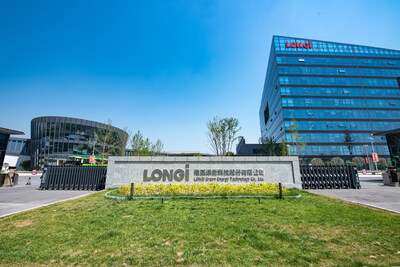
Photo - https://mma.prnewswire.com/media/2999457/DSC_0614.jpg
Logo - https://mma.prnewswire.com/media/1606520/LONGi_Logo.jpg
 View original content:https://www.prnewswire.co.uk/news-releases/longi-tops-wood-mackenzies-global-solar-pv-module-manufacturer-ranking-earns-grade-a-highest-rating-302808884.html

Asfinag und ÖAMTC kombinieren emotionale Bewusstseinsbildung mit neuer Technologie, um den „Arbeitsplatz Straße“ sicherer zu machen. Unter dem Slogan „Danke, dass du auf meine Mama/meinen Papa aufpasst“ starten die Organisationen eine gemeinsame Kampagne, bei der die Kinder der Mitarbeitenden als Botschafter auftreten. Hintergrund sind mehrere schwere Unglücke mit Autobahn-Personal: Im Jahr 2025 war Asfinag-Personal in sechs Unfälle auf Autobahnen involviert, einer davon endete tödlich. Parallel zu der Kampagne wird in Österreich ein KI-basiertes Warnsystem im Live-Betrieb getestet.
Die Dimension des Problems ist erheblich. Laut Daten von Statistik Austria und ÖAMTC kam es 2025 zu insgesamt 2.137 Unfällen mit Personenschaden auf Autobahnen und Schnellstraßen, 45 davon verliefen tödlich. Als häufigste Ursachen gelten Unachtsamkeit und Ablenkung. Eine IFES-Umfrage zeigt, wie verbreitet riskantes Verhalten ist: Ein Drittel der Befragten gibt an, während der Fahrt Handy-Nachrichten zu lesen oder zu schreiben, die Hälfte bedient Navi oder Radio. Unter den unter 30-Jährigen räumen 60 Prozent ein, schon einmal während der Fahrt ein Video aufgenommen zu haben.
Das neue KI-System zielt darauf ab, die Arbeit von Straßenkolonnen unter fließendem Verkehr besser abzusichern. Auf Sicherungsfahrzeugen oder Warnleitanhängern montierte Kameras erfassen Fahrzeuge in rund 300 Metern Entfernung. Die Künstliche Intelligenz analysiert daraufhin den Fahrweg der herannahenden Fahrzeuge und löst bei Kollisionsgefahr Warnungen aus: Die Person am Steuer wird mit einem Hupsignal aufmerksam gemacht, während Straßenarbeiter ein kleines Gerät am Körper tragen, das im Gefahrenfall vibriert. Diese wenigen zusätzlichen Sekunden sollen reichen, um sich aus der Gefahrenzone zurückzuziehen.
Derzeit sind fünf Kameras im Einsatz, weitere 21 Kollisionswarner werden angeschafft. Der Testbetrieb läuft bis Jahresende, anschließend soll über eine flächendeckende Einführung entschieden werden. Auch der ÖAMTC erprobt die Technologie im praktischen Alltag: Elf Fahrzeuge des Clubs wurden mit dem System ausgerüstet, sie werden in Wien, Niederösterreich und dem Burgenland getestet. Die Kombination aus KI-gestützter Früherkennung und einer breit angelegten Kampagne gegen Ablenkung am Steuer soll das Risiko für Verkehrspersonal senken – und zugleich Fahrerinnen und Fahrer stärker für die Konsequenzen ihres Verhaltens sensibilisieren.