SINGAPORE, June 22, 2026 /PRNewswire/ -- MediSun Energy, a Singapore-based leader in integrated brine management, announced a strategic joint venture with Yanrun Membrane Technology Co., Ltd., a premier national-level high-tech electro-membrane pioneer, at the Singapore International Water Week (SIWW) 2026.
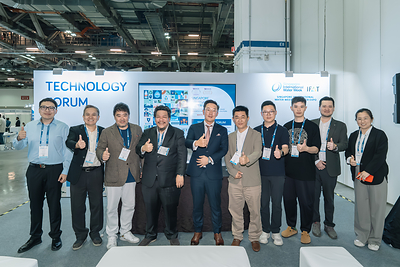
Through this strategic partnership, MediSun Energy and Yanrun will establish a new Singapore-based corporate entity, led by MediSun Energy, to serve as the exclusive global launchpad for their combined solutions outside of mainland China.
This joint venture will drive the international development, manufacturing, and distribution of a highly specialized suite of advanced systems, including Electrodialysis Bipolar Membrane (EDBM), Electrodialysis Metathesis (EDM), Electrodialysis (ED) stack systems, and Pressurised Forward Osmosis (PFO) systems, alongside integrated Zero Liquid Discharge (ZLD) solutions.
By combining MediSun Energy's extensive international network and proprietary expertise in energy-efficient brine management with Yanrun's deep R&D legacy in advanced electro-driven and bipolar membranes, the two companies will collaborate to address critical water scarcity and tightening industrial environmental regulations globally, with a specific focus on the Gulf Cooperation Council (GCC) region and Southeast Asia.
Dusun Kim, CEO & Co-Founder of MediSun Planet Pte Ltd, stated: "The global industrial market is facing an inflection point where conventional wastewater disposal is no longer sustainable, environmentally compliant, or economically viable. By combining MediSun Energy's international market reach and deep-tech brine management capabilities with Yanrun's world-class, multi-patent electro-membrane manufacturing engine, this partnership will bridge a critical industry gap. We are excited to offer heavy industry and desalination sectors across Southeast Asia and the GCC region access to next-generation, circular ZLD solutions that turn environmental liabilities into valuable resource streams."
Huang Quansen, Chairman of Yanrun, added: "Yanrun has consistently spearheaded the development, industrial application, and industry standard-setting of advanced electro-driven membranes within China. Establishing this exclusive international commercial platform alongside MediSun Energy marks a pivotal milestone in our global expansion strategy. This partnership allows us to seamlessly match our manufacturing excellence and cutting-edge membrane technology with MediSun Energy's prominent international presence, bringing clean, green, and circular industrial water reuse technologies to the global stage."
The launch of this joint venture underscores Singapore's position as a premier global hydrohub and a leading center for green technological innovation. By anchoring this international initiative in Singapore, both companies are uniquely positioned to leverage the nation's world-class business ecosystem to accelerate global climate resilience, decarbonize heavy industry, and promote long-term water security on an international scale.
About MediSun Energy
MediSun Energy is an integrated brine management company headquartered in Singapore. The company specializes in turning desalination brine and industrial waste streams into valuable resources through energy-efficient and circular solutions. MediSun's proprietary technologies — including Reverse Electrodialysis (RED) and CO₂ mineralization — are designed to decarbonize energy-intensive sectors such as desalination and heavy industry, supporting a more sustainable and resource-resilient future.
About Yanrun
Yanrun Membrane Technology Co., Ltd. is a Chinese national-level high-tech enterprise founded in 2010, specializing in the research, production, and industrial applications of electro-driven membranes. Led by prominent R&D teams, Yanrun has successfully undertaken several national-level initiatives, including China's prestigious 863 Plan, and holds 47 national invention and utility model patents, including the China Patent Excellence Award. With expansive manufacturing facilities in Mianzhu and Quanzhou, Yanrun produces tens of thousands of square meters of monolithic bipolar and homogeneous exchange membranes annually, driving sustainable circular industrial applications globally.
 View original content to download multimedia:https://www.prnewswire.co.uk/news-releases/medisun-energy-and-yanrun-announce-strategic-joint-venture-at-siww-2026-to-drive-global-advanced-water-treatment-and-zero-liquid-discharge-solutions-302804161.html

Die Artenvielfalt von Taufliegen (Drosophila) im Raum Wien ist in den vergangenen drei Jahrzehnten massiv eingebrochen. Forschende des Naturhistorischen Museums (NHM) Wien berichten, dass die Zahl der in der Stadt nachgewiesenen Arten im Vergleich zu einer Erhebung aus dem Jahr 1994 um rund 50 Prozent gesunken ist. Die Ergebnisse, die nun im Fachjournal „Ecology and Evolution“ veröffentlicht wurden, deuten darauf hin, dass vormals häufige Arten durch zugewanderte Taufliegen verdrängt worden sein könnten.
Grundlage der aktuellen Analyse ist das Citizen-Science-Projekt „Vienna City Fly“, das 2024 einfache Fliegenfallen an freiwillige Laienforscher in Wien, Niederösterreich und dem Burgenland verteilte. Die zurückgesandten Proben wurden für die nun publizierte Studie gezielt auf Fänge in unmittelbarer Nähe menschlicher Siedlungen beschränkt – also auf Innenräume, Balkone und Gärten. Damit liegt ein detailliertes Bild jener Drosophila-Gemeinschaft vor, die besonders eng an vom Menschen geprägte Lebensräume gebunden ist.
Insgesamt wurden mehr als 18.000 Taufliegen gesammelt und taxonomisch bestimmt; dabei identifizierte das Team um NHM-Forscher Martin Kapun 13 Drosophila-Arten. Bemerkenswert ist der Nachweis zweier Arten, die bislang in Österreich nicht registriert waren: Drosophila (D.) mercatorum und D. virilis. D. mercatorum ist ursprünglich in den USA, Mexiko und Südamerika verbreitet und wurde im vergangenen Jahrhundert nach Europa eingeschleppt, D. virilis stammt aus Asien und hat sich erst seit relativ kurzer Zeit über die nördliche Hemisphäre ausgebreitet.
Die Zusammensetzung der Populationen zeigt eine deutliche Verschiebung hin zu wenigen dominanten Generalisten. D. mercatorum mit rund 8.800 Nachweisen und die Modellorganismus-Art D. melanogaster mit etwa 6.700 Funden waren die mit Abstand häufigsten Spezies in den Proben. „Dominiert wird die Drosophila-Population im Wiener Stadtgebiet von Generalisten mit starker Affinität zum Menschen“, erklärte Kapun der Austria Presse Agentur zufolge. Die Ergebnisse unterstreichen, dass zunehmende Verbauung und die starke Prägung durch menschliche Siedlungen mit einem Rückgang der Biodiversität einhergehen können – auch bei unscheinbaren Insekten, die als wichtige Indikatoren für den Zustand urbaner Ökosysteme gelten.