EDINBURGH, Scotland, Aug. 20, 2026 /PRNewswire/ -- At this year's Edinburgh Festival Fringe, an original interdisciplinary theatre production Love in the Cracks has brought a humanoid robot to the stage, making it one of the most distinctive experimental works in the festival. This is the first time PrimeBOT Q1, a personal humanoid robot, has been featured on an international theatre stage, and it represents a deep collaboration between embodied AI technology and theatre arts at the creative level.
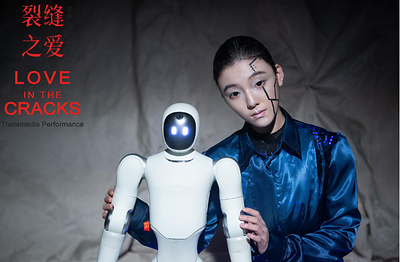
The production is co-created by Beijing Star Excellence Technology Co., Ltd. and the Intermedia Directing Art Lab of the Department of Directing at the Central Academy of Drama. The Central Academy of Drama, founded in 1950 as the first higher education institution for theatre in the People's Republic of China, is widely recognised as the country's leading institution for drama, film and television education. Through this collaboration, both parties are exploring the practical applications of humanoid robots in stage creation, expanding the boundaries of intermedia directing art and human-robot co-performance.
In Love in the Cracks, PrimeBOT Q1 appears as the embodied manifestation of a digital personality-generation system. Its compliant force control technology enables Q1 to move with exceptional fluidity and precision – it yields upon contact, stops immediately when pushed, and interacts with actors with a clear sense of restraint and responsiveness. What is more significant is that Q1 is not a closed system running pre-scripted programmes. The creative team used PrimeBOT's open developer console to carry out detailed motion capture and motion tuning, integrating the robot into the full rehearsal workflow. From the rehearsal room to the actual stage, Q1's movement rhythm, postural responses, and blocking timing were all meticulously refined over multiple sessions, eventually achieving a natural chemistry with the human performers – this is not a machine executing a program, but a machine taking part in the rehearsal process.
This appearance at the Edinburgh Fringe also reveals the broader potential of PrimeBOT beyond domestic settings. Q1 is not just a personal robot; it is an open creative platform – offering deep creative opportunities for theatre directors, choreographers, interdisciplinary artists, and independent creators. The developer console supports motion choreography, behavioural logic design, and custom interaction modes, meaning that any creator can use Q1 in their own way and make it an integral part of their artistic work. Looking ahead, whether for theatrical production, visual art, public space performance, or other yet-to-be-defined forms, PrimeBOT aspires to become a new medium in the hands of creators.
From its Gold award at the A' Design Award in Milan, to its showcase at the United Nations AI for Good Summit, and now to the stage of the Edinburgh Festival Fringe, PrimeBOT is entering people's lives in diverse and unexpected ways – not only in homes and daily life, but also in the realms of art and culture, exploring the many possibilities of human-robot coexistence.
 View original content to download multimedia:https://www.prnewswire.co.uk/news-releases/primebot-q1-takes-the-stage-at-edinburgh-festival-fringe-in-interdisciplinary-theatre-production-love-in-the-cracks-302856119.html

Asfinag und ÖAMTC kombinieren emotionale Bewusstseinsbildung mit neuer Technologie, um den „Arbeitsplatz Straße“ sicherer zu machen. Unter dem Slogan „Danke, dass du auf meine Mama/meinen Papa aufpasst“ starten die Organisationen eine gemeinsame Kampagne, bei der die Kinder der Mitarbeitenden als Botschafter auftreten. Hintergrund sind mehrere schwere Unglücke mit Autobahn-Personal: Im Jahr 2025 war Asfinag-Personal in sechs Unfälle auf Autobahnen involviert, einer davon endete tödlich. Parallel zu der Kampagne wird in Österreich ein KI-basiertes Warnsystem im Live-Betrieb getestet.
Die Dimension des Problems ist erheblich. Laut Daten von Statistik Austria und ÖAMTC kam es 2025 zu insgesamt 2.137 Unfällen mit Personenschaden auf Autobahnen und Schnellstraßen, 45 davon verliefen tödlich. Als häufigste Ursachen gelten Unachtsamkeit und Ablenkung. Eine IFES-Umfrage zeigt, wie verbreitet riskantes Verhalten ist: Ein Drittel der Befragten gibt an, während der Fahrt Handy-Nachrichten zu lesen oder zu schreiben, die Hälfte bedient Navi oder Radio. Unter den unter 30-Jährigen räumen 60 Prozent ein, schon einmal während der Fahrt ein Video aufgenommen zu haben.
Das neue KI-System zielt darauf ab, die Arbeit von Straßenkolonnen unter fließendem Verkehr besser abzusichern. Auf Sicherungsfahrzeugen oder Warnleitanhängern montierte Kameras erfassen Fahrzeuge in rund 300 Metern Entfernung. Die Künstliche Intelligenz analysiert daraufhin den Fahrweg der herannahenden Fahrzeuge und löst bei Kollisionsgefahr Warnungen aus: Die Person am Steuer wird mit einem Hupsignal aufmerksam gemacht, während Straßenarbeiter ein kleines Gerät am Körper tragen, das im Gefahrenfall vibriert. Diese wenigen zusätzlichen Sekunden sollen reichen, um sich aus der Gefahrenzone zurückzuziehen.
Derzeit sind fünf Kameras im Einsatz, weitere 21 Kollisionswarner werden angeschafft. Der Testbetrieb läuft bis Jahresende, anschließend soll über eine flächendeckende Einführung entschieden werden. Auch der ÖAMTC erprobt die Technologie im praktischen Alltag: Elf Fahrzeuge des Clubs wurden mit dem System ausgerüstet, sie werden in Wien, Niederösterreich und dem Burgenland getestet. Die Kombination aus KI-gestützter Früherkennung und einer breit angelegten Kampagne gegen Ablenkung am Steuer soll das Risiko für Verkehrspersonal senken – und zugleich Fahrerinnen und Fahrer stärker für die Konsequenzen ihres Verhaltens sensibilisieren.