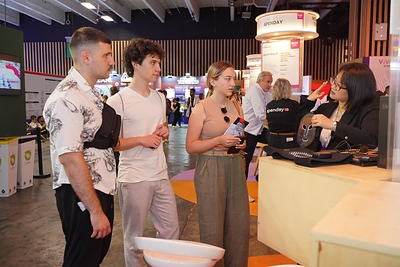
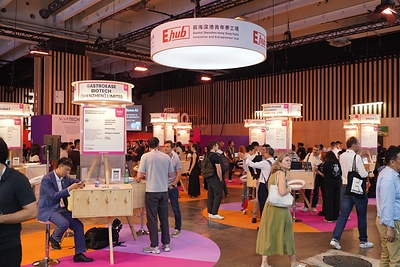
PARIS, June 27, 2026 /PRNewswire/ -- The Qianhai Shenzhen-Hong Kong Youth Innovation and Entrepreneur Hub (Ehub) made its debut at Viva Technology (VivaTech) Paris 2026, held from June 17 to 20, marking its first participation in Europe's leading startup event and one of the world's premier technology and innovation exhibitions.
Ehub's debut at VivaTech underscores its growing role as a gateway connecting the Guangdong-Hong Kong-Macao Greater Bay Area (GBA) with the global tech ecosystem. As Shenzhen further strengthens its international profile through major global events, including hosting the 2026 APEC meeting later this year, Ehub is expanding opportunities for startups to build international partnerships, access overseas markets and engage with cross-border innovation communities.
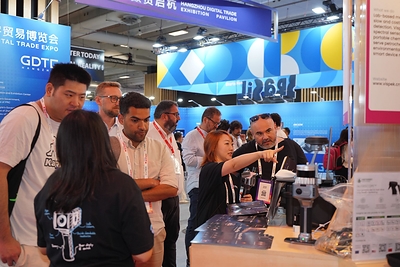
At VivaTech, Ehub led a delegation of six Hong Kong startups to Paris, including Vispek, GEE•D, InnAIO, SkylandX, GastroEase Biotech and i2Cool, representing sectors such as artificial intelligence, biotechnology, green technology and smart hardware.
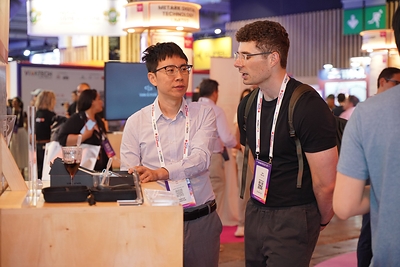
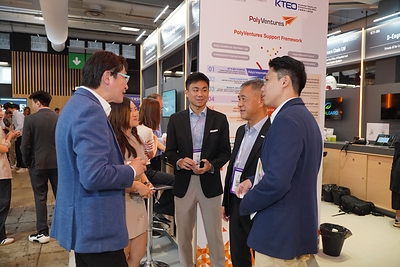
Throughout the exhibition, the delegation presented their solutions to global investors, industry leaders and potential business partners, while engaging in discussions on technology commercialization, investment and talent development. The event provided participating companies with valuable opportunities to expand their international networks and explore new collaborations across Europe and beyond.
"VivaTech provides an excellent platform to showcase the GBA's innovation strengths to the world," said Peter Mok, Ehub's General Manager. "By bringing together entrepreneurs, investors and technology leaders, we aim to foster international collaboration, create new opportunities for startups, and strengthen the GBA's position as a globally connected innovation hub."
Tony Gong, Marketing Manager of Vispek noted, "We received strong interest in our spectral imaging solutions from customers around the world, engaged with potential investors, and identified promising collaboration opportunities. The feedback we gained will also help us further refine our products for global markets."
"Our millisecond-level real-time translation and voice cloning technologies attracted strong interest from international buyers and investors. We sold out all demonstration units and secured multiple overseas partnership opportunities, marking a highly successful first step in our global expansion," shared Eva Yu, Partner and Head of China Business at InnAIO.
As a key platform for Shenzhen–Hong Kong innovation cooperation, Ehub connects talent, technology and capital to accelerate cross-border innovation and research commercialisation. Supporting this mission, five of Hong Kong's universities ranked among the QS World University Rankings Top 100 — including The University of Hong Kong, The Chinese University of Hong Kong, The Hong Kong University of Science and Technology, The Hong Kong Polytechnic University and Hong Kong Baptist University— have established innovation centres or research bases at Ehub. Their presence highlights collaboration between universities, industry and the technology sector, further strengthening the GBA's innovation ecosystem.
Building on its momentum, Ehub will continue to expand its international network, equipping next-generation startups with the resources, cross-border platforms, and global connections required to scale internationally.
About Ehub
Jointly initiated by the Qianhai Authority, the Hong Kong Federation of Youth Groups, and the Shenzhen Youth Federation, Ehub is an internationally oriented innovation and entrepreneurship platform that officially launched operations on December 7, 2014.
Ehub focuses on strategic sectors including artificial intelligence, embodied intelligence, life and health technologies, cultural and sports tech, and fintech. It was named the only national cross-border demonstration zone for youth innovation and entrepreneurship, and the Guangdong-Hong Kong and Guangdong-Hong Kong-Macao Greater Bay Area youth innovation and entrepreneurship bases.
As of May 2026, Ehub is home to 415 enterprises, of which 92 are recognised national high-tech enterprises, and collectively, the park companies have raised over RMB 9.5 billion in funding to date.
For more information, please visit www.ehub.hk.cn
 View original content to download multimedia:https://www.prnewswire.co.uk/news-releases/qianhai-ehub-brings-greater-bay-area-innovation-to-vivatech-paris-2026-302812584.html

Asfinag und ÖAMTC kombinieren emotionale Bewusstseinsbildung mit neuer Technologie, um den „Arbeitsplatz Straße“ sicherer zu machen. Unter dem Slogan „Danke, dass du auf meine Mama/meinen Papa aufpasst“ starten die Organisationen eine gemeinsame Kampagne, bei der die Kinder der Mitarbeitenden als Botschafter auftreten. Hintergrund sind mehrere schwere Unglücke mit Autobahn-Personal: Im Jahr 2025 war Asfinag-Personal in sechs Unfälle auf Autobahnen involviert, einer davon endete tödlich. Parallel zu der Kampagne wird in Österreich ein KI-basiertes Warnsystem im Live-Betrieb getestet.
Die Dimension des Problems ist erheblich. Laut Daten von Statistik Austria und ÖAMTC kam es 2025 zu insgesamt 2.137 Unfällen mit Personenschaden auf Autobahnen und Schnellstraßen, 45 davon verliefen tödlich. Als häufigste Ursachen gelten Unachtsamkeit und Ablenkung. Eine IFES-Umfrage zeigt, wie verbreitet riskantes Verhalten ist: Ein Drittel der Befragten gibt an, während der Fahrt Handy-Nachrichten zu lesen oder zu schreiben, die Hälfte bedient Navi oder Radio. Unter den unter 30-Jährigen räumen 60 Prozent ein, schon einmal während der Fahrt ein Video aufgenommen zu haben.
Das neue KI-System zielt darauf ab, die Arbeit von Straßenkolonnen unter fließendem Verkehr besser abzusichern. Auf Sicherungsfahrzeugen oder Warnleitanhängern montierte Kameras erfassen Fahrzeuge in rund 300 Metern Entfernung. Die Künstliche Intelligenz analysiert daraufhin den Fahrweg der herannahenden Fahrzeuge und löst bei Kollisionsgefahr Warnungen aus: Die Person am Steuer wird mit einem Hupsignal aufmerksam gemacht, während Straßenarbeiter ein kleines Gerät am Körper tragen, das im Gefahrenfall vibriert. Diese wenigen zusätzlichen Sekunden sollen reichen, um sich aus der Gefahrenzone zurückzuziehen.
Derzeit sind fünf Kameras im Einsatz, weitere 21 Kollisionswarner werden angeschafft. Der Testbetrieb läuft bis Jahresende, anschließend soll über eine flächendeckende Einführung entschieden werden. Auch der ÖAMTC erprobt die Technologie im praktischen Alltag: Elf Fahrzeuge des Clubs wurden mit dem System ausgerüstet, sie werden in Wien, Niederösterreich und dem Burgenland getestet. Die Kombination aus KI-gestützter Früherkennung und einer breit angelegten Kampagne gegen Ablenkung am Steuer soll das Risiko für Verkehrspersonal senken – und zugleich Fahrerinnen und Fahrer stärker für die Konsequenzen ihres Verhaltens sensibilisieren.