HANGZHOU, China, June 22, 2026 /PRNewswire/ -- The China National Silk Museum will launch its flagship exhibition, Silver Mountain Moon: Gaochang and Kucha on the Silk Road, on June 24, 2026. The exhibition, curated as the centerpiece of the 2026 Silk Road Week, runs under the theme "Harmony in Diversity, For a Shared Future."
Since its launch in 2020, Silk Road Week has evolved into a premier hallmark, featuring thematic exhibitions, academic symposiums, and events such as "Silk Road Nights." The 2026 Silk Road Week, with Xinjiang Uygur Autonomous Region as the guest region and the Kingdom of Morocco as the guest country of honor, offers a rich lineup of scholarly exchanges and public engagement activities.
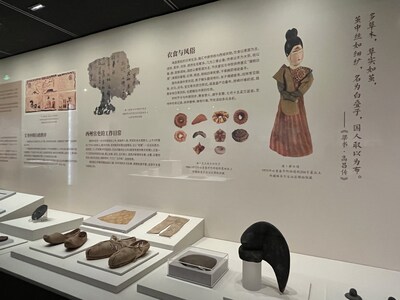
The exhibition Silver Mountain Moon traces the northern route of the ancient Silk Road—known as the "Middle Route" in the Tang Dynasty—from pivotal Gaochang in the Turpan Basin (present-day Turpan, Xinjiang Uygur Autonomous Region, China) westward to the renowned Buddhist center Kucha (present-day Kuqa, Xinjiang Uygur Autonomous Region, China). Featuring over 200 relics from 14 institutions in Zhejiang Province and the Xinjiang Uygur Autonomous Region, including 20 first-class national treasures, the exhibition showcases archaeological finds from ancient city sites and cave temples. Among the highlights are thousands of ancient manuscripts unearthed in Gaochang that testify to the region's administrative integration with the Central Plains during the Han and Tang dynasties, alongside exquisite murals from the Kizil Caves that reflect the fusion of Indian, Hellenistic, Persian, and Central Plains artistic traditions.
Located at the heart of the Eurasian continent, Xinjiang has been an integral part of China's territory since the Han Dynasty, when the central government established military garrisons and administrative offices in the region. The exhibition illustrates this history, demonstrating how Gaochang and Kucha became hubs of exchange, where diverse ethnic groups and traditions interacted and flourished. Notable figures such as the eminent monk Kumarajiva, who translated Buddhist scriptures for the Central Plains, and King Jiangbin of Kucha, who adopted Han court customs, are symbols of this enduring cross-exchange.
The exhibition Silver Mountain Moon will be on display from June 24 through September 1, 2026, at the China National Silk Museum in Hangzhou. It invites audiences to explore the profound legacy of the Silk Road and the inclusive spirit shaping Chinese civilization over thousands of years.
Photo - https://mma.prnewswire.com/media/2997992/1.jpg
 View original content:https://www.prnewswire.co.uk/news-releases/silver-mountain-moon-a-major-silk-road-exhibition-opens-during-2026-silk-road-week-at-china-national-silk-museum-302806135.html

Der Asbest-Skandal rund um mehrere Steinbrüche im Burgenland entwickelt sich zu einer Milliardenbelastung für die öffentliche Hand. Nach einer neuen Berechnung der Umweltorganisation Greenpeace wird der materielle Schaden durch Entsorgung und Sanierung mindestens 1,6 Milliarden Euro betragen. Betroffen sind nicht nur das Burgenland, sondern auch Teile der Steiermark, Niederösterreichs sowie Gebiete in Ungarn, in die asbesthaltiges Material geliefert oder verbaut wurde.
Grundlage der Kostenschätzung ist die Annahme, dass seit 1990 rund 26 Millionen Tonnen asbesthaltiges Gestein aus vier Steinbrüchen abgebaut wurden. Greenpeace geht davon aus, dass etwa 20 Millionen Tonnen kurz- oder langfristig auf Asbestdeponien landen werden, während der Rest als Straßenunterbau, Fundamente oder in privaten Gärten in der Umwelt verbleibt und kaum mehr rückholbar ist. Rund 20 Prozent des Abfalls sollen in Form von asbesthaltigem Asphalt anfallen, dessen Deponierung besonders aufwendig ist und künftige Straßensanierungen über Jahrzehnte verteuern dürfte.
Mindestens drei Viertel der veranschlagten 1,6 Milliarden Euro entfallen laut Greenpeace auf die Entsorgung des Materials, der Rest auf Sanierungen. Für die Rechnung wurde ein Entsorgungspreis von lediglich 50 Euro je Tonne angesetzt – etwa die Hälfte des vor Bekanntwerden des Skandals üblichen Marktpreises. Diese Kalkulation sei nur zu halten, wenn rasch neue, sichere und kostengünstige Deponien errichtet werden, etwa in bereits geschlossenen Steinbrüchen, argumentiert Greenpeace. Andernfalls könnten sich die Gesamtkosten nach Einschätzung der Organisation auf mindestens das Doppelte erhöhen.
Die von Greenpeace genannten Summen übersteigen die Umsätze der betroffenen Steinbruchbetreiber deutlich und dürften auch die finanziellen Möglichkeiten des Landes Burgenland überfordern. Die Umweltorganisation drängt daher auf ein Eingreifen des Bundes und fordert, Mittel aus der Katastrophenhilfe bereitzustellen und einen Rahmen für eine kostengünstige Entsorgung zu schaffen. Zugleich verweist sie auf die Verantwortung des zuständigen Umweltministers, für ausreichend Deponiekapazitäten zu sorgen, um Kostenrisiken zu begrenzen und die logistisch aufwendige Räumung der asbestbelasteten Materialien langfristig planbar zu machen.