First Teaser Trailer Unveiled Featuring Nearly 4 Minutes of Dynamic Action and Music; Animation Produced by CyberAgent Group's New Studio "CA Soa"
TOKYO, June 30, 2026 /PRNewswire/ -- CyberAgent, Inc. today announced that The Bugle Call: Song of War (written by Sora Mozuku and illustrated by Higoro Tomori), a popular manga serialized in Shueisha's Jump SQ., will be adapted into a TV anime scheduled to begin broadcasting and streaming in 2027.
Animation production for the series will be handled by "CA Soa," a newly established animation studio within the CyberAgent Group headed by representative and anime producer Masakazu Ogawa. The distinguished staff includes Shinya Watada as Director, Michihiro Tsuchiya handling Series Composition, and Michinori Chiba as Character Designer. CG production for the action and combat sequences will be led by Shirogumi, the acclaimed visual effects studio. This project marks the inaugural title produced by CA Soa.
The Bugle Call: Song of War follows Luca, a young boy dreaming of becoming a "musician," whose special power "sprouts" amidst a harsh destiny. The narrative depicts his growth through meaningful encounters with new companions. Luca's unique ability to "see sound" and his strong aspiration to become a musician blend seamlessly with intense battles. With "sound" serving as a central theme, Hitomi Koto (composer for Kyoto Animation's Sparks of Tomorrow) will oversee the music. The background score heavily incorporates live instruments, delivering a dramatic musical performance that heightens both the emotional depth of the characters and the dynamic combat scenes.
Alongside the TV anime announcement, a teaser visual and an extensive teaser trailer spanning nearly 4 minutes were unveiled, allowing audiences to experience the captivating worldview, the intensity of the battles, and the meticulously crafted music.
Please look forward to further updates for the 2027 broadcast approaches.
Teaser Visual & Teaser Trailer Unveiled!
YouTube URL: https://youtu.be/0Qcxnm06hjo
That boy could see sound.
The story begins the moment a special power "sprouts" within the protagonist Luca, who dreams of becoming a "musician."
The newly released extended teaser trailer highlights Luca's encounter with Zoe, a fellow "branch-holder," and depicts their growth as they navigate their inner conflicts. Furthermore, it offers a spectacular, comprehensive look at the seamless fusion of Shirogumi's dynamic CG action and the meticulously crafted background score tailored perfectly to the series.
About TV Anime The Bugle Call: Song of War Overview
Follow "The Bugle Call: Song of War" on Social Media:
Official Website: https://The Bugle Call: Song of War-anime.com
Official X: @BugleCall_anime
INTRODUCTION:
That boy could see sound.
Luca, a boy with branches sprouting from his head, serves as a bugler in a mercenary company that thrives on war. Though surrounded by conflict, he dreams of becoming a musician.
One day, amid the chaos of battle, a mysterious power awakens within him. His journey soon brings him into contact with the Pontiff, who stands at the pinnacle of the nation; Zoe, a fellow Branch-Born; and many others whose lives are intertwined with his own.
Through these encounters, Luca's destiny begins to change in ways he could never have imagined.
Arboral Year 1294—a battle that will determine the future is about to begin.
Staff:
Original Story: Sora Mozuku (Story) / Higoro Tomori (Art) (Serialized in Shueisha's Jump SQ.) Director: Shinya Watada
Series Composition: Michihiro Tsuchiya
Character Design: Michinori Chiba
Action Animator: Hiroshi Arisawa
Concept Design: Kanetake Ebikawa
Prop Design: Takayuki Yanase
Music: Hitomi Koto
CG Production: Shirogumi
Animation Production: CA Soa
Original Manga Information:
Publisher: SHUEISHA Inc. "JUMP SQUARE"
Author: Sora Mozuku (Story) / Higoro Tomori (Art)
Volumes: Volumes 1–13 currently available in Japanese.
Copyright: ©Mozuku Sora, Higoro Toumori/Shueisha,The Bugle Call Partners
*Copyrights must be indicated when posting or using the images/materials


Video - https://www.youtube.com/watch?v=0Qcxnm06hjo
Photo - https://mma.prnewswire.com/media/3002652/Cuts.jpg
Photo - https://mma.prnewswire.com/media/3002654/Teaser_Visual_EN.jpg
 View original content:https://www.prnewswire.co.uk/news-releases/the-bugle-call-song-of-war-announces-tv-anime-adaptation-in-2027-302815037.html

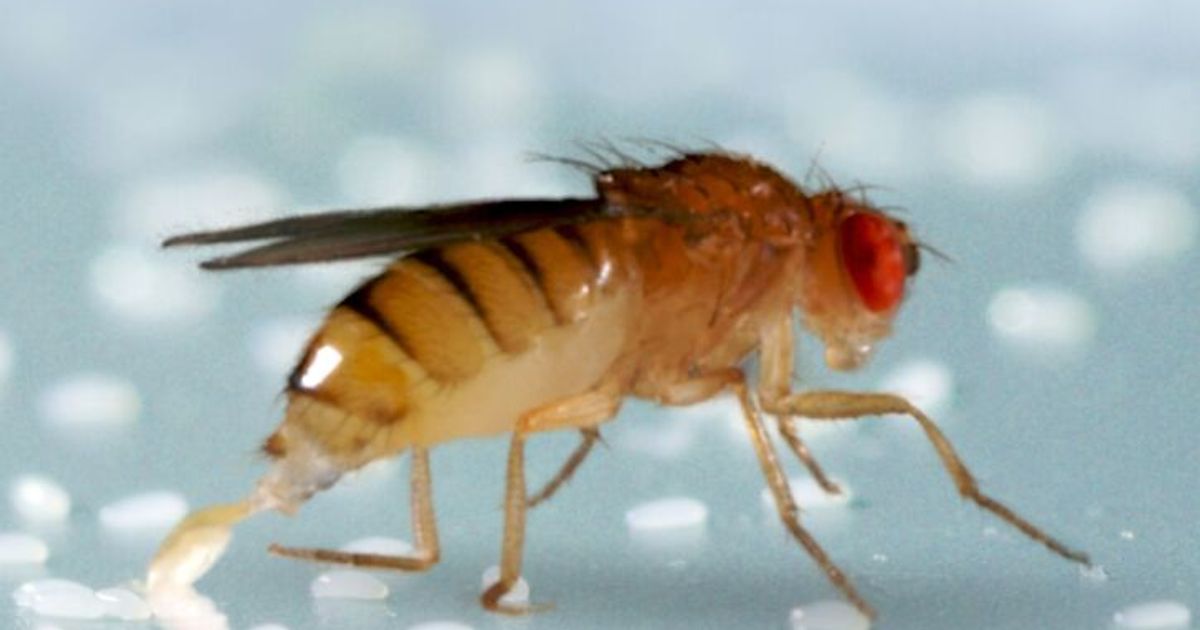
Die Artenvielfalt von Taufliegen (Drosophila) im Raum Wien ist in den vergangenen drei Jahrzehnten massiv eingebrochen. Forschende des Naturhistorischen Museums (NHM) Wien berichten, dass die Zahl der in der Stadt nachgewiesenen Arten im Vergleich zu einer Erhebung aus dem Jahr 1994 um rund 50 Prozent gesunken ist. Die Ergebnisse, die nun im Fachjournal „Ecology and Evolution“ veröffentlicht wurden, deuten darauf hin, dass vormals häufige Arten durch zugewanderte Taufliegen verdrängt worden sein könnten.
Grundlage der aktuellen Analyse ist das Citizen-Science-Projekt „Vienna City Fly“, das 2024 einfache Fliegenfallen an freiwillige Laienforscher in Wien, Niederösterreich und dem Burgenland verteilte. Die zurückgesandten Proben wurden für die nun publizierte Studie gezielt auf Fänge in unmittelbarer Nähe menschlicher Siedlungen beschränkt – also auf Innenräume, Balkone und Gärten. Damit liegt ein detailliertes Bild jener Drosophila-Gemeinschaft vor, die besonders eng an vom Menschen geprägte Lebensräume gebunden ist.
Insgesamt wurden mehr als 18.000 Taufliegen gesammelt und taxonomisch bestimmt; dabei identifizierte das Team um NHM-Forscher Martin Kapun 13 Drosophila-Arten. Bemerkenswert ist der Nachweis zweier Arten, die bislang in Österreich nicht registriert waren: Drosophila (D.) mercatorum und D. virilis. D. mercatorum ist ursprünglich in den USA, Mexiko und Südamerika verbreitet und wurde im vergangenen Jahrhundert nach Europa eingeschleppt, D. virilis stammt aus Asien und hat sich erst seit relativ kurzer Zeit über die nördliche Hemisphäre ausgebreitet.
Die Zusammensetzung der Populationen zeigt eine deutliche Verschiebung hin zu wenigen dominanten Generalisten. D. mercatorum mit rund 8.800 Nachweisen und die Modellorganismus-Art D. melanogaster mit etwa 6.700 Funden waren die mit Abstand häufigsten Spezies in den Proben. „Dominiert wird die Drosophila-Population im Wiener Stadtgebiet von Generalisten mit starker Affinität zum Menschen“, erklärte Kapun der Austria Presse Agentur zufolge. Die Ergebnisse unterstreichen, dass zunehmende Verbauung und die starke Prägung durch menschliche Siedlungen mit einem Rückgang der Biodiversität einhergehen können – auch bei unscheinbaren Insekten, die als wichtige Indikatoren für den Zustand urbaner Ökosysteme gelten.