IBM moves to third phase of DARPA's rigorous evaluation of approaches to building a fault-tolerant quantum computer
YORKTOWN HEIGHTS, N.Y., Oct. 7, 2026 /PRNewswire/ -- IBM (NYSE: IBM) today announced it has been selected for Stage C, the third phase of the Quantum Benchmarking Initiative (QBI) led by DARPA, the United States Defense Advanced Research Projects Agency. This phase will advance IBM through DARPA's verification process, in which independent experts extensively test and measure quantum hardware, technology, systems engineering, and architectures to determine if a company can build a fault-tolerant quantum computer.
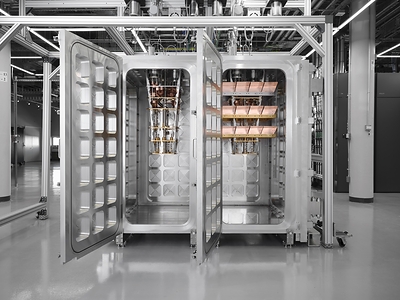
"Advancing to the third stage of DARPA's Quantum Benchmarking Initiative validates the strength of IBM's path to building a fault-tolerant quantum computer," said Jay Gambetta, Director of IBM Research and IBM Fellow. "IBM expects to deliver the first fault-tolerant system in 2029, and we plan to scale the value of quantum computing well beyond that timeline. We look forward to working with DARPA's team of experts as they advance their review of approaches to fault-tolerant quantum computing into the testing phase."
As an independent research and development arm of the U.S. Department of Defense, DARPA launched the QBI in 2024 to determine whether an industrially useful fault-tolerant quantum computer can be built by 2033. The program defines such a system as one whose computational value will exceed its cost. IBM has successfully progressed through the QBI's assessment process, including the first two stages that analyzed comprehensive R&D plans and risk mitigation approaches.
IBM has built the strongest quantum foundation in the industry, anchored by the largest fleet of quantum computers across the globe and Qiskit, the world's most popular quantum software. IBM's quantum computers are already being used today as scientific tools by a network of more than 340 organizations across financial services, healthcare, materials science, academia, and government as they build industrial applications and pursue algorithms to unlock the full potential of fault-tolerant quantum computing.
Last year, IBM laid out its plans to deliver the world's first fault-tolerant quantum computer, IBM Quantum Starling. Starling will combine advances in error correction, processor design, systems engineering, and more. Since then, IBM's progression has remained on course, including the demonstration of core hardware components for fault tolerance and breakthroughs in efficient error correction decoding.
Advancing to Stage C
Each successful QBI performer has progressed through three stages of the program thus far:
Alongside its participation in QBI, IBM continues to collaborate with partners across industry, government, and academia to accelerate the timeline toward fault-tolerant quantum computing.
For more information about the Quantum Benchmarking Initiative, visit the DARPA website.
About IBM
IBM is a leading global hybrid cloud and AI, and business services provider, helping clients in more than 175 countries capitalize on insights from their data, streamline business processes, reduce costs and gain the competitive edge in their industries. Thousands of governments and corporate entities in critical infrastructure areas such as financial services, telecommunications and healthcare rely on IBM's hybrid cloud platform and Red Hat OpenShift to affect their digital transformations quickly, efficiently and securely. IBM's breakthrough innovations in AI, quantum computing, industry-specific cloud solutions and business services deliver open and flexible options to our clients. All of this is backed by IBM's legendary commitment to trust, transparency, responsibility, inclusivity and service.
For more information, visit https://research.ibm.com.
Media contacts:
Erin Angelini
IBM
edlehr@us.ibm.com
Chris Nay
IBM
cnay@us.ibm.com

 View original content to download multimedia:https://www.prnewswire.co.uk/news-releases/ibm-advances-to-stage-c-of-darpa-quantum-benchmarking-initiative-302901682.html

Bei den Vereinigten Bühnen Wien (VBW) steht ein markanter Wechsel an der Spitze an: Mit 1. Dezember übernimmt die deutsch-österreichische Kulturmanagerin Andrea Pier die Geschäftsführung des städtischen Theaterkonzerns von Franz Patay. Der 65-Jährige hatte die VBW seit 2016 geleitet und war insgesamt zehn Jahre in geschäftsführender Verantwortung. Unter seinem Kommando mussten die Häuser – Raimund Theater, Ronacher und das Musiktheater an der Wien – heuer Einsparungen von fünf Millionen Euro verkraften, womit das Jahresbudget auf 51 Millionen Euro sank. Der Führungswechsel erfolgt damit in einer Phase, die von Budgetdruck und Konsolidierungszwängen geprägt ist.
Mit Pier steht erstmals offiziell eine Frau dauerhaft an der Spitze der Vereinigten Bühnen Wien; ein nur kurzes Interregnum von Lia Metchev-Herbst im Jahr 2016 ausgenommen. Die 1969 in Bielefeld geborene Managerin setzte sich in einem von der externen Personalberatung Christoph la Garde organisierten Auswahlverfahren gegen 18 Mitbewerberinnen und Mitbewerber durch. Die Hearing-Kommission – unter anderem mit der VBW-Aufsichtsratsvorsitzenden Elisabeth Freismuth, der Direktorin des Jüdischen Museums Wien, Barbara Staudinger, sowie Wien-Holding-Geschäftsführerin Karin Ramser – entschied sich einstimmig für Pier und hob insbesondere ihre Doppelkompetenz im öffentlichen Kultursektor und in der Privatwirtschaft hervor.
Pier war in den vergangenen fünf Jahren als Managing Director maßgeblich für das Projekt Kulturhauptstadt Chemnitz 2025 verantwortlich und zuvor zwei Jahrzehnte in unterschiedlichen leitenden Funktionen beim Musical- und Theaterkonzern Stage Entertainment tätig. Dort leitete sie unter anderem das traditionsreiche Theater des Westens in Berlin und verantwortete das Tourgeschäft. Mit Blick auf die Sparvorgaben in Wien verweist sie auf ihre Erfahrung im privatwirtschaftlichen Umfeld: Entscheidend sei, „die richtigen Weichen zu stellen, um weiterhin die künstlerische Exzellenz hochzuhalten“. An der internen Budgetverteilung zwischen Oper und Musical sieht sie derzeit keinen Änderungsbedarf und kündigt an, vorerst auf Kontinuität zu setzen.
Trotz zusätzlicher Konkurrenz durch das im Bau befindliche private „Theater im Prater“ zeigt sich Pier gelassen. Wichtiger als strukturelle Eingriffe sei für sie ein klarer künstlerischer Kurs, den sie mit „großem Tatendrang“ ab Dezember in Wien verfolgen will. Für die Stadt markiert ihre Bestellung auch eine personelle Weichenstellung: Vizebürgermeisterin Barbara Novak und Kulturstadträtin Veronica Kaup-Hasler, die Pier im Ronacher gemeinsam mit Wien-Holding-Chefin Ramser präsentierten, betonten die Bedeutung ihrer langjährigen Musical- und Managementerfahrung für die künftige Positionierung der Vereinigten Bühnen Wien im internationalen Wettbewerb.