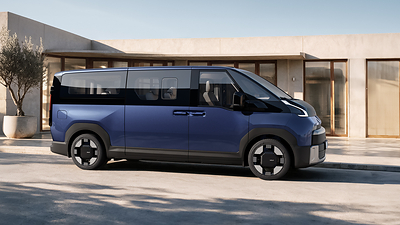
HANNOVER, Germany, Sept. 14, 2026 /PRNewswire/ -- Kia Corporation (Kia) today unveiled the Kia PV7 at IAA Transportation 2026 in Hannover, Germany. The second model in Kia's dedicated, all-electric Platform Beyond Vehicle (PBV) lineup, the PV7 expands the brand's offering in the light commercial vehicle (LCV) segment.
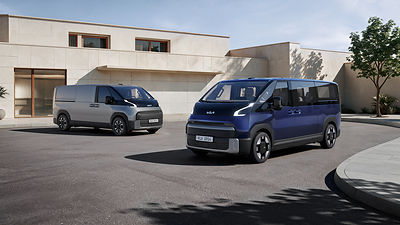
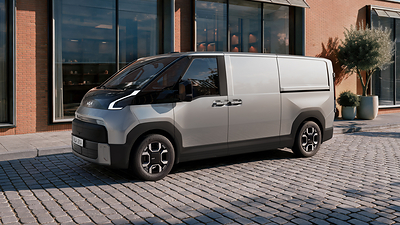
Available in Cargo and Passenger variants, the PV7 combines electric performance, flexible interior space and connected technology to support a wide range of business and mobility applications. Built on Kia's PBV-dedicated E-GMP.S architecture, it features a flat-floor design that maximizes interior space and flexibility, along with productivity-focused solutions that help customers achieve greater productivity in their day-to-day operations and drive stronger business outcomes. Kia will launch the PV7 in Korea and Europe in 2027, with additional derivatives and markets to follow.
"The PV7 marks the next step in our journey toward personalized mobility, building on the foundation established by the PV5," said Ho Sung Song, President and CEO at Kia. "By bringing together hardware developed for specific applications, business-tailored software and dedicated PBV services, the PV7 goes beyond the vehicle itself to deliver a complete business solution that helps customers achieve greater productivity, flexibility and long-term value."
How does the PV7 advance Kia's PBV strategy?
Building on the foundation established by the PV5, named the 2026 International Van of the Year, the PV7 expands the scale and scope of Kia's PBV offering. Its larger dimensions and broader application potential enable Kia to serve a wider range of customer needs, from fleet, logistics and shuttle operations to small- and medium-sized businesses and personal mobility. Kia's PV7 strategy is built around three business-focused pillars: hardware, software and service.
At the hardware level, the PV7 is built on Kia's PBV-dedicated E-GMP.S architecture, leveraging Kia's proven EV expertise and Flexible Body System[1] to support a wide range of body styles, derivatives and conversion models tailored to diverse operational needs. This comprehensive lineup enables the PV7 to serve as a business-tailored tool, providing customers with the flexibility to adapt the vehicle to their specific operational requirements.
At the software level, Kia provides the Kia Business Solutions Portal, which supports fleet management, charging, maintenance and daily operations. Standardized Fleet Management System (FMS) and connected vehicle data APIs tailored to customers' operational needs help improve fleet visibility and support more efficient day-to-day operations.
In addition, Kia offers dedicated Uptime services that support vehicle availability through real-time monitoring, predictive diagnostics and proactive maintenance management. Together, these connected solutions are designed to reduce operational disruption and support Kia's commitment to service excellence.
Kia's business-tailored service is centered on PBV-dedicated services designed to provide tailored support across diverse business operations, lower total cost of ownership and support higher vehicle uptime. Kia plans to expand the PV7 lineup to 23 variants following its 2027 launch, with the PV9 set to follow in 2029, further broadening the brand's PBV lineup and mobility solutions.
"The PV7 has been developed to give customers the flexibility to adapt as needs evolve," said Sangdae Kim, Executive Vice President and Head of Kia's PBV Business Division. "As a business-tailored tool engineered to deliver best-in-class EV performance, data-driven solutions, and total service excellence, it will enable customers to improve work efficiency, enhance productivity, and create greater value throughout the business lifecycle."
-ENDS-
Visit Kia Global Newsroom for more Kia content
For more information, visit the Kia Global Brand Site or Kia Global Newsroom. Follow our Kia Global Newsroom Instagram channel @kia.globalnews and LinkedIn account @Kia Global News
[1] Flexible Body System (FBS) is Kia's next-generation modular body architecture that enables the flexible development of diverse body styles and derivatives from a standardized vehicle structure. |
 View original content to download multimedia:https://www.prnewswire.co.uk/news-releases/kia-pv7-expands-all-electric-pbv-lineup-with-greater-capacity-and-flexibility-302877451.html

Die Festnahme des freien Journalisten Michael Bonvalot bei einer Versammlung in Steyr entwickelt sich in Österreich zu einem politischen Streitfall über das Verhältnis von Polizei, Demonstrationsrecht und Pressefreiheit. Bonvalot wollte nach eigenen Angaben am vergangenen Sonntag über einen „Aufmarsch der rechten Verschwörungsszene“ berichten, als er trotz gültigem Presseausweis von Einsatzkräften abgeführt wurde. Inzwischen ist ein Video des Vorfalls online, das die Debatte zusätzlich anheizt.
Steyrs Bürgermeister Markus Vogl (SPÖ) machte den Einsatz beim Sicherheitsgipfel mit der Polizei zum Thema und sprach von einem Vorgang, der „schwer zu verdauen“ sei. Nicht nur die Versammlungsfreiheit sei ein „hohes Gut“, betonte er, sondern ebenso die Pressefreiheit. Journalisten müssten bei solchen Einsätzen genauso geschützt werden wie Demonstrationsteilnehmer. Laut Vogl hatte Bonvalot aus rund 50 Metern Abstand berichten sollen und sich mit einem gültigen Presseausweis ausgewiesen.
Der Bürgermeister knüpfte seine Kritik an eine breitere Auseinandersetzung über die seit Jahren stattfindenden sonntäglichen Aufmärsche in Steyr. Diese sogenannten Spaziergänge, deren jüngste Ausgabe die 300. gewesen sein soll, hätten sich nach seinen Worten „bedauerlicherweise zu einer Anlaufstelle für demokratiefeindliche Gruppen“ entwickelt – mit prominenter Beteiligung von Szenefiguren wie Gottfried Küssel und Ken Jebsen. Während die Polizei bislang keine Gründe für ein Verbot dieser Versammlungen gesehen habe, entstehe nun der Eindruck, dass gegenüber einem Berichterstatter mit „zweierlei Maß“ gemessen werde. Vogl fordert von der Exekutive daher „vertrauensbildende Maßnahmen“; der Eindruck, polizeijuristische Einschätzungen gälten nicht für alle gleich, sei „untragbar“.
Innenminister Gerhard Karner (ÖVP) stellte sich demonstrativ hinter die Einsatzkräfte. Er verteidigte das Vorgehen der Polizei am Donnerstag als „verhältnismäßig und korrekt“ und widersprach damit der Darstellung, es handle sich um einen unverhältnismäßigen Eingriff in die Arbeit der Medien. Details zu der Einsatzbewertung blieben zunächst knapp, doch die veröffentlichten Videoaufnahmen dürften sowohl von Kritikern als auch von Befürwortern der Polizei genau analysiert werden. Während Vogl betont, er wolle trotz der guten bisherigen Zusammenarbeit mit der Polizei „nicht einfach zur Tagesordnung übergehen“, signalisiert das Innenministerium Rückendeckung für die Einsatzlinie vor Ort – ein Spannungsfeld, das die Diskussion über die Grenzen und den Schutz journalistischer Arbeit bei Demonstrationen weiter befeuern dürfte.