A 20-country poll shows nearly 90% believe powerful nations need the international system, alongside strong support for a woman Secretary-General
WASHINGTON, Sept. 17, 2026 /PRNewswire/ -- As world leaders arrive in New York for UN General Assembly High-level Week, the United Nations Foundation today released results of a new global poll, which finds that 57% of citizens fear for the future, while nearly 90% believe that not even the most powerful nations should confront turbulent times on their own. The global public wants a reinvigorated UN, under an outward-facing leader, even as 85% have heard little about the race to find a new Secretary-General, the poll shows.

The report, "A Mandate for Renewal: Global Public Opinion on the United Nations and the Selection of the 10th Secretary-General," analyzes results of a poll conducted in 20 countries home to 56% of the global population. Fielded by GeoPoll, the poll is the first to survey the race to lead the UN and captures the views of 5,000 citizens, including from all 15 members of the UN Security Council, as it votes on candidates for what has been described as the "world's toughest job."
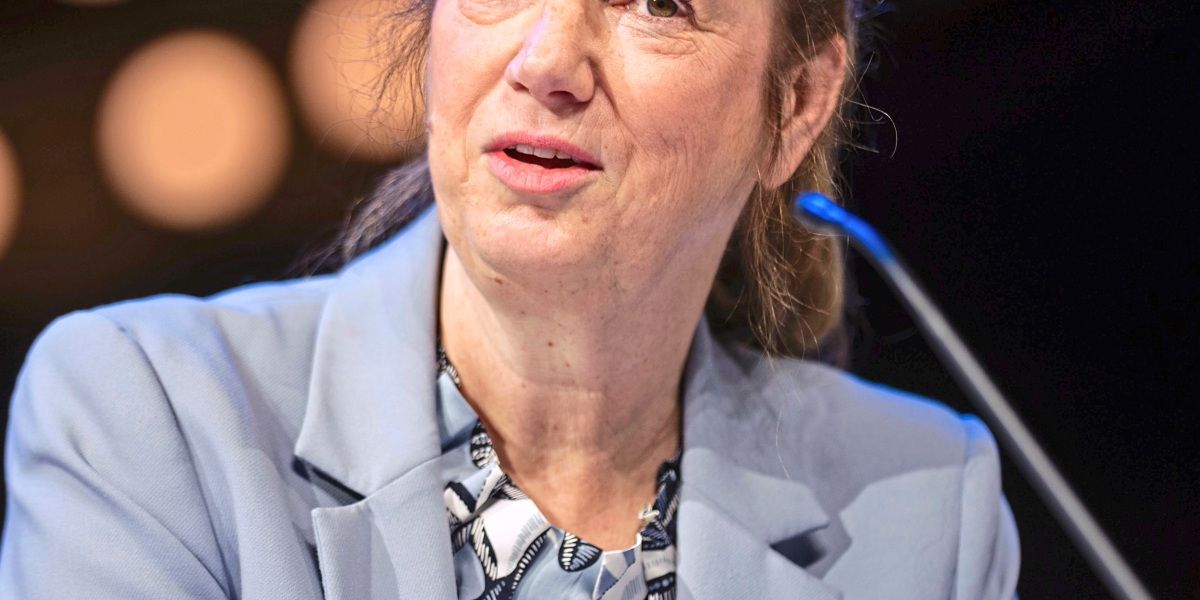
"In an increasingly turbulent world, we need a multilateral system that delivers," said UN Foundation President and CEO Elizabeth Cousens. "A re-energized United Nations is vital to that task, making the upcoming leadership transition possibly the most consequential in the UN's history. The selection of a new Secretary-General offers a rare opportunity to define why the institution exists, who it serves, and how it can achieve results in a fragmented world."
With a crowded field and no clear frontrunner, the Secretary-General race is moving into decisive stages, with the Security Council expected to hold straw polls directly before and shortly after UN General Assembly High-level Week.
The survey shows that while a majority of citizens (58%) trust the UN to deliver, public patience is finite. Citizens want a bold, visible leader who can rebuild faith in shared solutions, while six in ten respondents want the UN to break with 80 years of history and select the first woman Secretary-General.
"While the world still trusts the UN, the global public is eager for change," said former UN Deputy Secretary-General and UN Foundation Board Member Mark Malloch-Brown. "The next Secretary-General will have an opportunity to connect directly with citizens and show how the UN can turn their expectations into results that matter in their daily lives."
Key findings from the report include:
View the full press kit, including images, methodology, and additional resources.
 View original content to download multimedia:https://www.prnewswire.co.uk/news-releases/new-poll-global-public-backs-stronger-un-and-wants-bold-leadership-from-next-secretary-general-302882184.html

Die Österreichischen Bundesbahnen (ÖBB) holen den Bahnhofskomplex Wien-Mitte nach rund zwei Jahrzehnten wieder vollständig in den eigenen Konzern zurück. Der Aufsichtsrat der ÖBB-Infrastruktur AG hat dem Rückkauf des Areals, das 2005 an die damalige BA/CA-Gruppe verkauft worden war, zugestimmt. Verkäufer ist nun eine Investorengruppe unter Führung von Morgan Stanley Real Estate Investing. Neben den Bahnanlagen umfasst die Transaktion auch das Einkaufszentrum "The Mall" sowie umfangreiche Büroflächen. Über den Kaufpreis wurde Stillschweigen vereinbart; der Abschluss steht noch unter dem Vorbehalt der kartellrechtlichen Genehmigung und ist für Ende Dezember geplant.
Mit der Übernahme würden Immobilie und Bahninfrastruktur erstmals seit mehr als zwanzig Jahren wieder in einer Hand zusammengeführt. Wien-Mitte ist gemessen an den Fahrgastzahlen der viertgrößte Bahnhof Österreichs und ein zentraler Verkehrsknoten, an dem sich S-Bahn, mehrere U-Bahn-Linien sowie der Flughafenzug CAT treffen. Täglich halten nach Angaben der ÖBB fast 600 Züge an dem Standort. Bahnanlagen und Gebäude seien baulich und technisch eng miteinander verbunden, heißt es. Künftige Änderungen an Zugängen, Stiegen, Belüftung oder Leitungen müssen damit nicht mehr mit einem externen Immobilieneigentümer abgestimmt werden.
Die ÖBB sehen in dem Rückkauf einen strategischen Schritt, um die Entwicklung des Standorts aus einer Hand zu steuern. Das soll zusätzlichen Handlungsspielraum für die kommenden Jahrzehnte schaffen, in denen die derzeit modernisierte S-Bahn-Stammstrecke mehr Züge aufnehmen soll. Die Funktion des Standorts als Bahnhof soll nach Angaben des Unternehmens wieder stärker im Namen, an den Zugängen und in der architektonischen Gestaltung zum Ausdruck kommen. Für die bestehenden Mietverhältnisse im Einkaufszentrum und in den Büros kündigte die ÖBB an, dass diese unverändert weitergelten.
Wien-Mitte blickt auf eine lange und wechselvolle Geschichte zurück. Der Standort wurde 1848 als Bahnhof Hauptzollamt eröffnet und ging 1934 in das Eigentum der Bahn über. Ab den späten 1950er-Jahren entstanden über den Gleisen unter anderem ein Bürotrakt und eine Markthalle, bevor die Liegenschaft 2005 veräußert wurde. Die spätere Entwicklung des Areals war von intensiven öffentlichen Debatten begleitet, unter anderem wegen geplanter Hochhäuser mit bis zu 97 Metern Höhe und der Diskussion um mögliche Auswirkungen auf den UNESCO-Welterbestatus. Mit der nun geplanten Re-Integration in den ÖBB-Konzern verknüpft das Unternehmen die Aussicht, die verkehrliche Rolle des Standorts und die bauliche Entwicklung langfristig aufeinander abzustimmen.