Third national survey by SMU on dementia found that stigma persists;
despite rising awareness, preparedness remains below neutral
SINGAPORE, May 13, 2026 /PRNewswire/ -- Singaporeans are significantly more aware of dementia than they were five years ago, but most still do not know where to turn for help, according to a new nationwide study by Singapore Management University (SMU). Members of the general public, particularly those without personal exposure, continue to hold the most negative perceptions towards individuals and families navigating dementia.
These were among the key findings uncovered in the 2026 Remember.For.Me. survey, examining public awareness, stigma and support perceptions related to dementia towards persons living with dementia in Singapore. Led by Rosie Ching, Principal Lecturer of Statistics, SMU and 89 undergraduate students, the study took place over a span of five weeks from January 2026 through a Statistic project integrating statistical learning with societal engagement and impact.
Data was collected from persons living with dementia, caregivers and the general public through a combination of face-to-face interviews, including visits to dementia daycare centres and digital surveys, with a total of 10,827 respondents across Singapore. This data-driven study builds on two earlier nationwide surveys conducted in 2019 and 2023, by Ms Ching in partnership with Dementia Singapore (DSG).
"The data through three runs of Remember.For.Me. gives a powerful longitudinal snapshot of Singapore in the dementia landscape," said Ms Rosie Ching, Principal Lecturer of Statistics, SMU. "My beloved great-grandmother died of this in the 1990s when I was a student. Her suffering and the family's anguish is something I'll never forget. I am deeply grateful to all who have journeyed with Remember.For.Me. across its three national waves since 2019: DSG, care partners, friends, colleagues and students. We are privileged to serve our nation through statistics that will help Singapore become more prepared and more inclusive as we confront the realities of dementia in a super-aged society."
Bryan Tan, CEO, Dementia Singapore, said: "As Singapore becomes a super-aged society, building a dementia-inclusive nation requires more than awareness — it requires a shift in public perception. By sharing personal stories of individuals and families affected by dementia, including young-onset dementia, we hope to reduce stigma, encourage empathy, and encourage greater understanding of dementia and its impact on families. Together with our volunteers and supporters at Dementia Singapore, we aim to nurture a more caring and understanding Singapore that is supportive of everyone affected by dementia."
Key findings of practical relevance:
1. Higher awareness of dementia, yet it is not regarded as personally relevant
Dementia knowledge has increased significantly, rising from a mean of 3.47 in 2019 to 4.68 in 2026 (p<.001). However, the main reason for low awareness has shifted.
In 2026, the top reason cited is "no family history" (40%), overtaking lack of outreach. This suggested that despite its growing prevalence, many Singaporeans still see dementia as not personally relevant.
"We've made progress in awareness, but the barrier has changed," said Ms Ching. "People are no longer saying they haven't heard about dementia but they're saying it doesn't concern them."
2. Despite improved awareness, knowledge of support structures remains lacking
While perceptions of support effectiveness have improved steadily since 2019, the study highlighted a critical disconnect:
"As Singapore moves towards becoming a super-aged society, the findings suggest that dementia increasingly affects not only healthcare, but preparedness, navigation, inclusion and social understanding," commented Ms Rosie Ching.
3. Stigma remains a barrier, especially among the unexposed
The study found that overall stigma has not significantly declined since 2023, with the general public, particularly those without personal exposure, continuing to hold the most negative perceptions.
The 2023 survey had reflected a marked improvement over 2019, where persons living with dementia reported a drop in feelings of loneliness and rejection by members of society. But deeper issues, such as embarrassment and perceptions of incompetence, remain prevalent in 2026.
4. Inclusion still lags
Despite gains in awareness and support, inclusivity remains largely unchanged over the three study waves. More than half of persons living with dementia continue to perceive low levels of inclusion in everyday life. This suggests that while Singapore is becoming more informed, it is not yet meaningfully more inclusive.
5. Rising urgency in an ageing society
The findings come as Singapore approaches its status as a superaged society, with dementia cases projected to exceed 150,000 by 2030.
Across three national waves, the study underscored a clear conclusion: Singapore has moved beyond a knowledge deficit, but now faces a more complex challenge of turning awareness into action.
While knowledge and perceived support have improved, progress had not yet translated into:
"The question is how we can continue becoming more prepared, more navigable and more inclusive before dementia becomes even more common in everyday life," commented Ms Rosie Ching.
Click here for the full report.
Logo - https://mma.prnewswire.com/media/2214752/Singapore_Management_University_Logo.jpg
 View original content:https://www.prnewswire.co.uk/news-releases/new-survey-reveals-that-singaporeans-know-more-about-dementia-but-nearly-7-in-10-are-unsure-where-to-seek-help-302770704.html

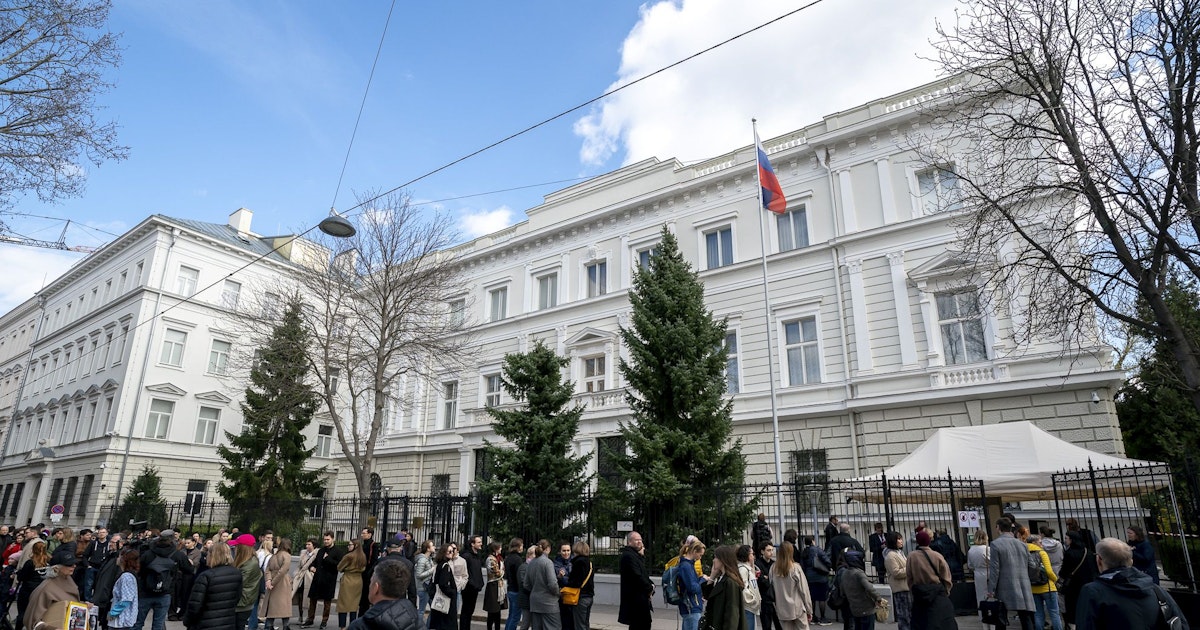
Österreich hat wegen mutmaßlicher Abhör-Spionage drei Mitarbeiter der russischen Botschaft in Wien ausgewiesen und damit seinen Kurs gegenüber ausländischen Geheimdiensten deutlich verschärft. Auslöser sind umfangreiche Antennenanlagen auf den Dächern der russischen Botschaft im dritten Wiener Gemeindebezirk sowie auf einer russischen Diplomatensiedlung in der Donaustadt. Über diese Signalaufklärungsanlagen sollen nach Angaben österreichischer Behörden Daten abgefangen werden, die unter anderem von internationalen Organisationen über Satelliteninternet übermittelt werden.
Der Verfassungsschutz verweist in seinem aktuellen Bericht ausdrücklich auf die Anlage in der Donaustadt und warnt vor einem Reputationsschaden für Österreich durch die von Wien ausgehenden Aktivitäten. Die Direktorin des Staatsschutzes (DSN), Sylvia Mayer, stuft die russischen Signalaufklärungsanlagen aufgrund ihrer Größe und technischen Ausstattung als bedeutenden Risikofaktor ein. Neben Russland nennt der Bericht auch China und den Iran als besonders aktive Akteure, die eine hybride Bedrohungsstrategie mit Cyberangriffen, Spionage und Desinformation verfolgen.
Die Justiz hatte gegen drei technische Mitarbeiter der russischen Botschaft wegen des Verdachts geheimdienstlicher Tätigkeit im Zusammenhang mit den Abhöranlagen ermittelt. Um weitergehende Untersuchungen zu ermöglichen, forderte das Außenministerium die Aufhebung ihrer diplomatischen Immunität und setzte dafür eine Frist von 14 Tagen. Da Moskau dieser Aufforderung nicht nachkam, erklärte Wien die drei Betroffenen zu unerwünschten Personen. Sie mussten Österreich verlassen; ihre Immunität wurde nicht aufgehoben.
Außenministerin Beate Meinl-Reisinger bezeichnete Spionage als Sicherheitsproblem für Österreich und sprach von einem Kurswechsel der Regierung, die nun konsequenter dagegen vorgehen wolle. Es sei inakzeptabel, diplomatische Privilegien für nachrichtendienstliche Zwecke zu nutzen, habe Wien der russischen Seite unmissverständlich mitgeteilt. Russland kündigte laut der staatlichen Nachrichtenagentur RIA eine harte Reaktion auf die Ausweisungen an. Seit Beginn des Ukraine-Krieges hat Österreich nach Behördenangaben insgesamt 14 Mitarbeiter der russischen Botschaft ausgewiesen, dennoch sind weiterhin rund 220 Personen an russischen Vertretungen im Land akkreditiert.
Parallel zu den diplomatischen Maßnahmen treibt die Bundesregierung eine Reform des Strafrechts voran. Staatssekretär Jörg Leichtfried erklärte, man befinde sich in Schlussverhandlungen über ein neues Spionagegesetz. Der bislang stark eingeschränkte Spionagebegriff solle deutlich erweitert werden, um verdeckte Einflussnahme und technische Aufklärung besser erfassen zu können. Die Ausweisung der drei Techniker wertet die DSN-Führung als Schritt, um die Risiken durch die Antennenanlagen in Wien zu reduzieren, während sich die Beziehungen zwischen Wien und Moskau weiter eintrüben.