CHANGZHOU, China, Sept. 24, 2026 /PRNewswire/ -- TrinaTracker, a global provider of smart tracking systems and a wholly owned subsidiary of Trina Solar Co., Ltd. (SHA: 688599), has launched two self-developed robotic products: BUILDEX PV Module Installation Robot and AURORA PV Cleaning Robot, to expand its Smart PV Ecosystem.
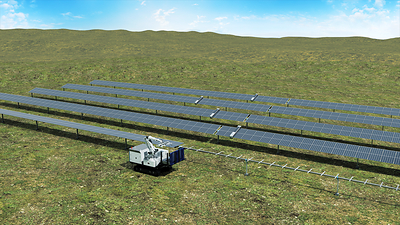
Since the beginning of the year, TrinaTracker has transformed from a tracking system equipment supplier into a Smart PV and Robotics Solution Provider. By integrating high-reliability trackers, AI algorithms, installation and cleaning robots, as well as engineering and intelligent operations services, the company delivers a full lifecycle solution for PV power plants by optimizing plant design, improving construction and O&M quality, and reducing operational costs.
BUILDEX PV Module Installation Robot: Breaking Construction Bottlenecks
Large-scale PV projects have traditionally relied heavily on manual module installation, resulting in heavy labor input, long construction cycles, high costs, inconsistent installation precision and safety risks, hindering barriers to standardized rollout. BUILDEX reshapes PV construction through automated, standardized and intelligent workflows.
Powered by high-precision AI vision positioning and integrated precision mechanical control systems, BUILDEX autonomously completes module picking, transportation, alignment and placement. It adapts to complex terrain and diverse tracker layouts, reducing labor intensity and safety risks while improving installation accuracy and delivery speed for large-scale solar bases.
AURORA PV Cleaning Robot: Safeguarding Energy Yield and Enabling Refined Smart O&M
PV plants operate under harsh outdoor conditions. Dust and stains on module surfaces block sunlight and reduce power generation, undermining long-term plant revenue. Conventional manual cleaning is constrained by terrain, weather, labor and safety risks, making it unsuitable for large-scale refined O&M. AURORA delivers unmanned, non-damaging, regular and intelligent cleaning to maintain module cleanliness, boost power output, lower long-term O&M costs and unlock asset value.
Combining AI & Robotics: Redefining PV Asset Value
TrinaTracker's investment in AI and robotics is not merely hardware iteration, but a strategic upgrade of its full-stack "Tracker+" smart energy ecosystem. AI serves as the digital brain for robotic hardware, connecting construction automation and routine O&M. Physical PV assets are coupled with digital twins to help plant owners lower LCOE and maximize asset value.
Global operational data from TrinaTracker's worldwide portfolio fuels continuous AI algorithm optimization, equipping its robots with strong adaptability for complex terrain, extreme weather and dynamic structural conditions. Robot data integrates with Trina's digital platform to create a new model of fully automated, intelligent PV plant management.
The rollout of AI robotic products marks a key milestone in TrinaTracker's transformation from "equipment leadership" to "digital & intelligent leadership". Moving forward, TrinaTracker will continue advancing PV intelligence, enriching its robot portfolio and deepening AI integration across PV scenarios to refine the "Tracker+" ecosystem. The company will deliver all-in-one smart PV solutions to accelerate global solar development and support clean energy transition and carbon neutrality goals.
 View original content to download multimedia:https://www.prnewswire.co.uk/news-releases/trinatracker-launches-two-robots-to-expand-its-smart-pv-ecosystem-302889017.html

Eine Podiumsdiskussion der Wiener FPÖ zum Titel „Der Preis des Klimakommunismus – Wer zahlt die Zeche?“ sorgt in der Stadtpolitik für erheblichen Wirbel. Die Freiheitliche Akademie Wien, das Freiheitliche Bildungsinstitut und der FPÖ-Rathausklub laden am 6. Oktober in die Volkshalle des Wiener Rathauses und holen dafür James Taylor, Präsident des US-amerikanischen Heartland Institute, nach Wien. Taylor gilt seit Jahren als prominenter Akteur der internationalen Szene, die den menschengemachten Klimawandel in Zweifel zieht, und steht seit Langem in der Kritik, weil seine Organisation nachweislich Geld aus der fossilen Industrie erhalten hat.
Auf dem Podium sollen neben Taylor der Wiener FPÖ-Chef Dominik Nepp, Gerald Zmuegg von der Freiheitlichen Wirtschaft Wien sowie der Unternehmer und Politblogger Gerald Markel diskutieren. Eröffnet wird der Abend vom Wiener FPÖ-Klubobmann Maximilian Krauss. Inhaltlich bedient die FPÖ damit ein Narrativ, das sie seit geraumer Zeit in der Klimadebatte verwendet: Klimaschutzmaßnahmen werden als „Klimakommunismus“ adressiert und damit als ideologisch motivierte, wirtschaftlich schädliche Eingriffe gerahmt. Im Zentrum der Veranstaltung steht laut Ankündigung nicht die Abrechnung mit den Kosten der aktuellen Klimaauswirkungen, sondern mit jenen einer ambitionierten Klimapolitik.
Die Einladung Taylors fällt in ein Jahr, das in Europa und Österreich von außergewöhnlichen Wetterextremen geprägt ist. 2026 brachte neue Temperaturrekorde, eine hohe Zahl an Hitzetagen und Tropennächten und eine sich seit dem Frühjahr verschärfende Trockenheit. In der Landwirtschaft werden die Hitzeschäden europaweit auf 14 bis 17 Milliarden Euro geschätzt, für Österreich beziffert die Hagelversicherung den Dürreschaden auf rund 1 Milliarde Euro. Die Agentur für Gesundheit und Ernährungssicherheit (AGES) meldet zudem eine Rekordzahl an Hitzetoten: Im Juni und Juli starben demnach 646 Menschen in Österreich an den Folgen der Hitze. Vor diesem Hintergrund kritisieren Gegner der Veranstaltung, die FPÖ ignoriere die realen Kosten und Risiken der Erderwärmung, während sie über vermeintliche Kosten von Klimapolitik diskutieren lässt.
Wiens Bürgermeister Michael Ludwig (SPÖ) distanzierte sich in einer Stellungnahme deutlich von der inhaltlichen Ausrichtung des Abends. Die Stadt bekenne sich zu den wissenschaftlichen Erkenntnissen über den menschengemachten Klimawandel und zu einer verantwortungsvollen Klimapolitik, betonte er. Positionen, die Klimaschutz pauschal als „Klimakommunismus“ diffamieren, lehne er ausdrücklich ab. Zugleich verwies Ludwig auf die Rolle des Rathauses als „Haus der Demokratie“: Den im Gemeinderat vertretenen Fraktionen stünden grundsätzlich Räumlichkeiten für Veranstaltungen zur Verfügung. Kritik kam auch von den Wiener Grünen, deren Vorsitzender Peter Kraus die Einladung Taylors als „Verhöhnung“ der Bevölkerung bezeichnete, die mit den Folgen von Hitze und Dürre konfrontiert sei, und den Bürgermeister aufforderte, zu prüfen, ob für eine derartige Veranstaltung tatsächlich Räume im Rathaus zur Verfügung gestellt werden sollten.